Colonial photography is always vexing. It comes wrapped in an alluring veil of objectivity that disguises the racist and paternalist priorities of its photographers. European photographers, oriented towards the picturesque and exotic, highlighted all that was different about the conquered territory.
With all that in mind, Burma's 19th century has its canonical photographers, including prolific professionals like Philippe Adolphe Klier and early adventurers like Linnaeus Tripe. Their orientalizing gaze must be handled with care, but they do document elements of the world of 19th century Burma.
Here we have a set of photographs taken by Louis Allan Goss. The nephew of Clement Williams (whose career in Burma is documented in Graham's 2025 The Informal Imperialist), Goss came to Burma to join his uncle in business in Mandalay. He ended up settling in Rangoon and becoming involved in colonial education there, and made translations from Burmese and Pali texts into English (more biographical details on each can be found here.)
He was evidently quite the photographer, and his extensive collection of photographs were donated to the Cambridge Museum of Archaeology and Anthropology (MAA) in the 1930s by his widow. Other materials associated with Clement Williams have recently been donated to the Royal Ontario Museum, and together these form a substantial collection documenting some aspects of life in the 19th century in Burma.
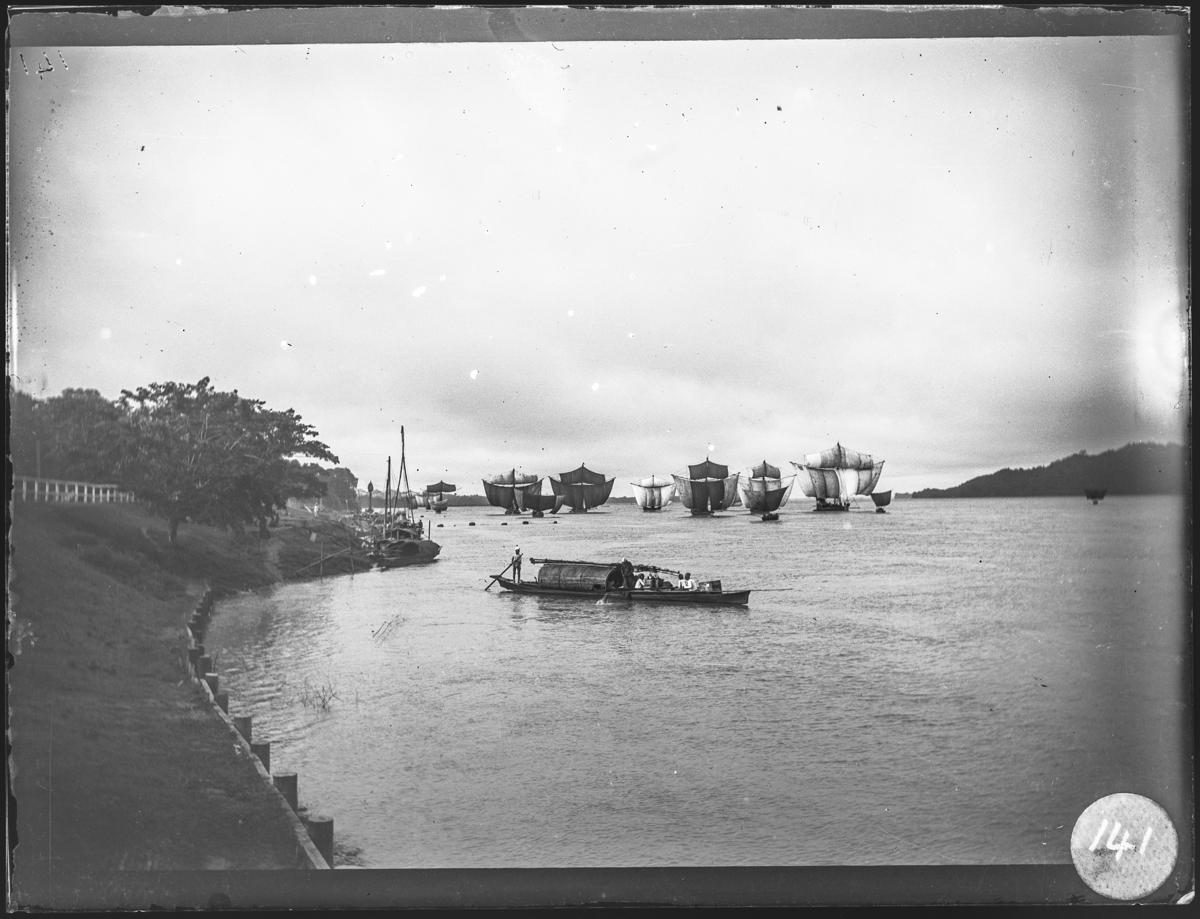
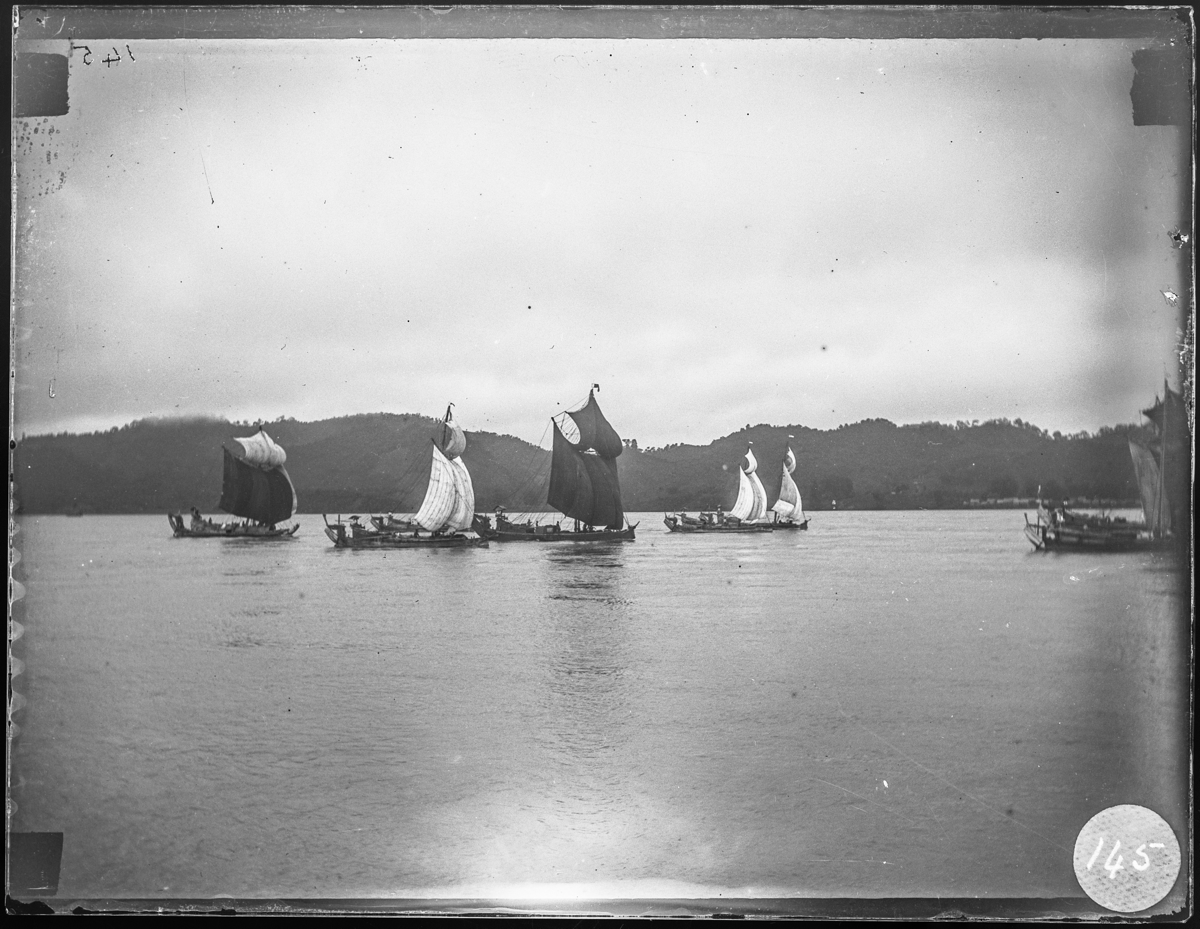
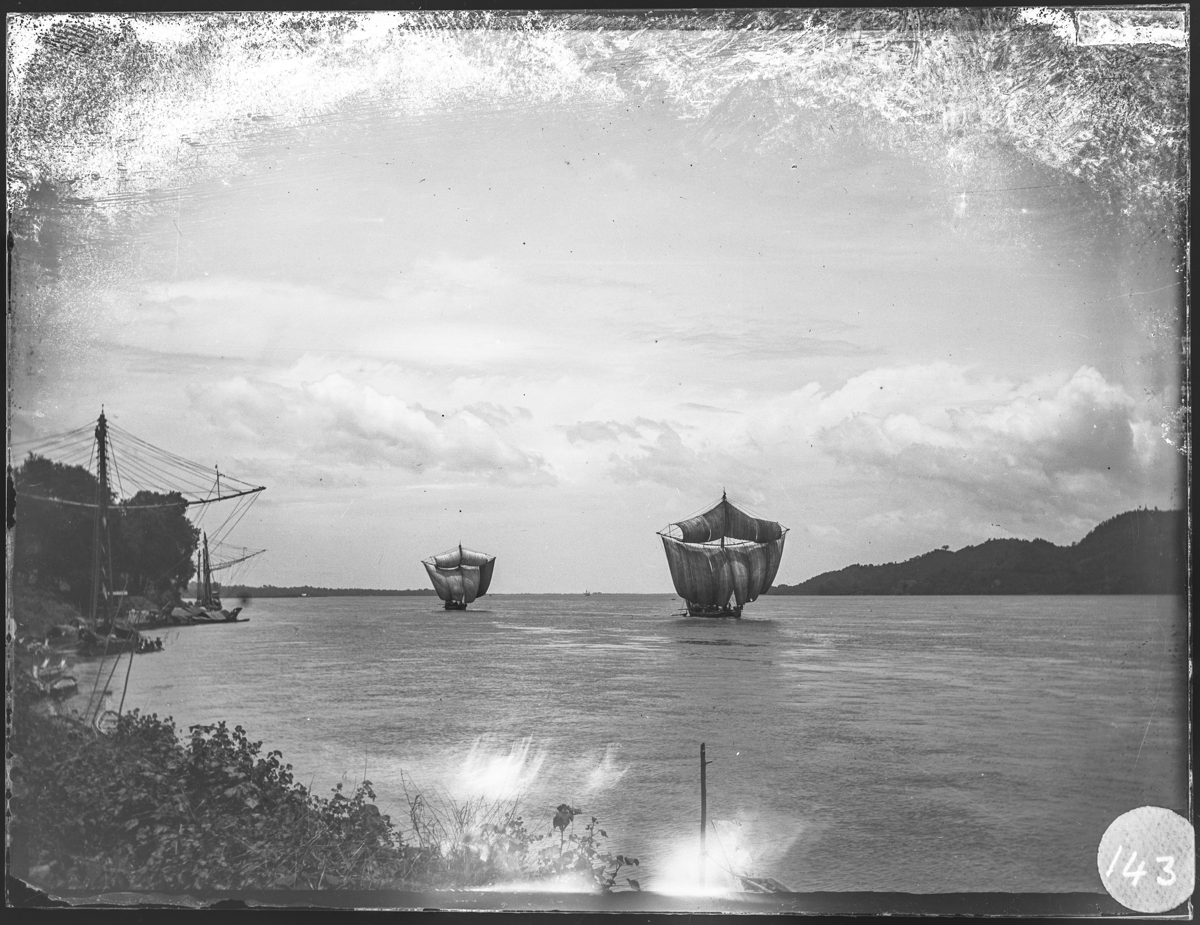
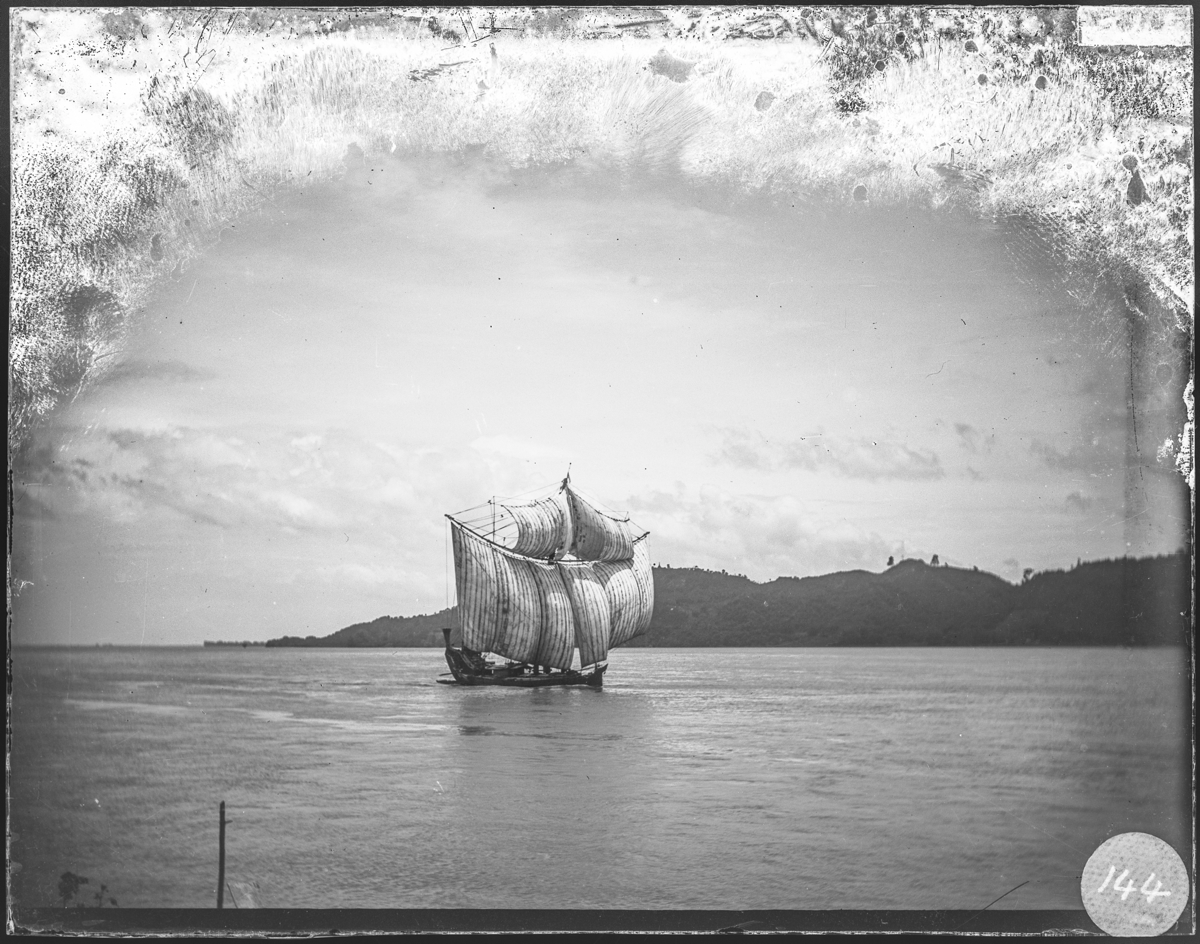
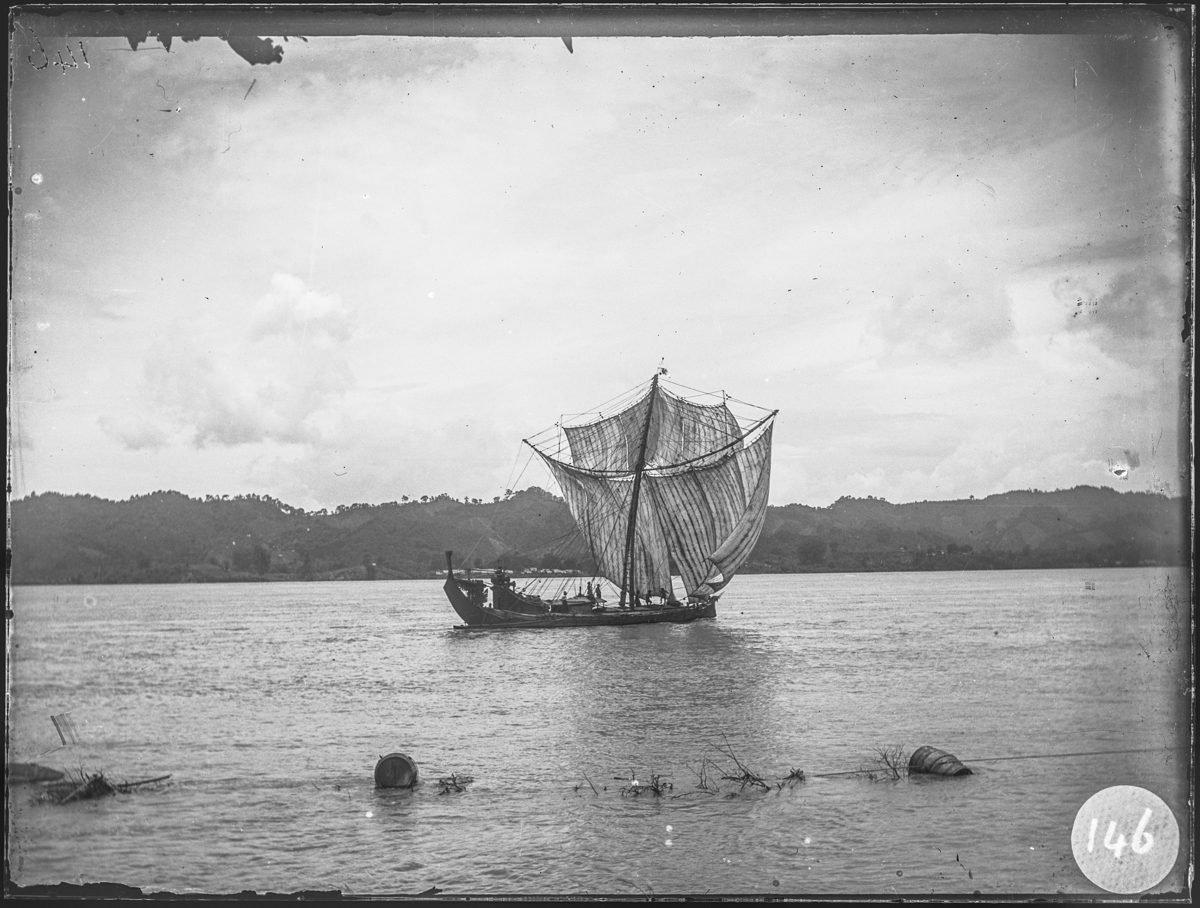
Here we have a few photographs from the MAA collection, all seemingly taken on one pleasant afternoon. Goss had a good vantage point right on the bank of the Irrawaddy river, from which he took a number of photos of Burmese sailing ships ascending the river from south to north, laden with cargo. Such ships were major infrastructure in Burma, and were specialized for sailing upstream against the current in this way. On a return journey, the river's current does the work.
The colonial envoys who visited the royal court in Amarapura in 1855 journeyed north on such ships, and Yule described their distinctive spreading sails as appearing like butterflies. The Burmese characterization of such sails is more fearsome - they are named "ဂဠုန်တောင်ရွက်," the "wings of Garuda."
"These boats can scarcely sail, of course, except before the wind. But in ascending the Irawadi, as on the Ganges during the rainy season, the wind is almost always favourable. A fleet of them speeding before the wind with the sunlight on their bellying sails has a splendid though fantastic appearance. With their vast spreading wings and almost invisible hulls, they look like a flight of colossal butterflies skimming the water." (Henry Yule, A Narrative of the Mission Sent by the Governor-General of India to the Court of Ava in 1855, 1858).
 |
| Source |
 |
| Source |
 |
| Source |
 |
| Source |

No comments:
Post a Comment